Awareness Ribbon Breast Cancer Floral
First Impressions: Graceful, Recognizable, and Thoughtfully Balanced
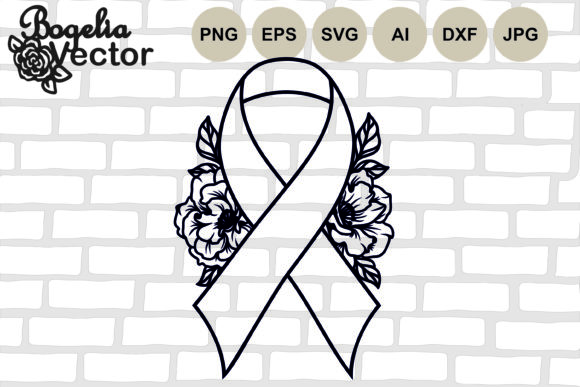
When I opened Awareness Ribbon Breast Cancer Floral for the first time, I didn’t see just another ribbon motif—I saw a quiet moment of intention. The design blends the universally understood breast cancer awareness ribbon with soft floral accents: delicate stems, subtle petals, and gentle curves that wrap around the ribbon’s loop without overwhelming it. It’s not overly ornate, nor is it minimal to the point of sterility. That balance matters—especially when you’re stitching for real people who’ll hold, wear, or gift something made from this design.
Real Project Test: A Custom Embroidered Tote for a Local Fundraiser
Last month, I used Awareness Ribbon Breast Cancer Floral on a set of organic cotton tote bags for a community wellness fair. We paired it with light sage thread on cream canvas—no heavy fill, no dense satin borders—and the result felt warm, dignified, and handmade in the best sense. Customers paused at the booth not because the design shouted, but because it invited quiet recognition. That’s the power of this layout: it supports meaning without demanding attention. It works beautifully as a focal point on a tote bag design, pillow cover, or tea towel—places where clarity, scale, and emotional resonance all matter.
Where It Shines (and Where It Asks for Extra Care)
Awareness Ribbon Breast Cancer Floral performs especially well on medium-weight, stable fabrics like cotton twill, linen-cotton blends, and midweight denim. On sweatshirt embroidery? Yes—if you use tear-away stabilizer underneath and keep stitch density moderate. For baby embroidery on onesies or burp cloths? It holds up cleanly, provided you avoid tiny corners where fine floral details might blur on stretchy knit fabric.
That said, proceed thoughtfully with:
- Small hoop sizes—the ribbon’s curve and floral extension need breathing room; below 4" x 4", some subtlety gets lost;
- Textured or napped fabrics like terry cloth or fleece—fine stems can disappear without proper topping;
- Dark fabric backgrounds—test contrast early; light thread colors may need an underlay or slightly heavier satin stitch;
- Curved surfaces like caps or hats—consider simplifying outer petals if distortion becomes noticeable;
- Frequent-wash items like kitchen towels or baby blankets—verify stitch density isn’t so low that fill areas pull or fray over time.
Design Integrity Meets Customer Trust
As an embroidery designer and Etsy seller myself, I know buyers don’t just buy a machine embroidery design—they buy confidence in outcome. Awareness Ribbon Breast Cancer Floral delivers that quietly. Its clean lines translate well across digital embroidery file previews, printable mockups, and physical stitched samples. There’s no visual clutter competing with the message, which strengthens brand consistency for small shop products or boutique branding. When customers see this on a personalized gift or custom apparel piece, they feel seen—not marketed to.
It also avoids common pitfalls: no micro-lettering that vanishes in satin stitch, no overlapping elements that create unintended density, and no fragile negative space that collapses on thin fabric. That reliability directly lifts perceived product value—and makes repeat orders more likely.
Practical Designer Notes Before You Stitch
Before committing to your first run, here’s what I always do with a new embroidery file like Awareness Ribbon Breast Cancer Floral:
- Run a test on scrap fabric matching your final project’s weight and weave;
- Check thread color contrast in both natural and artificial light—especially important for awareness-themed work;
- Review stitch density visually in your embroidery software; look for any unusually tight clusters near floral tips or ribbon ends;
- Confirm hoop size compatibility—this design benefits from at least a 5" x 7" hoop for full expression;
- Inspect small details at 200% zoom: are petal edges crisp? Does the ribbon taper smoothly?
- Test it in black-and-white mockups to assess silhouette strength—vital for craft fair signage or digital product previews;
- Compare how it reads on light vs. dark fabric backgrounds using simple grayscale overlays;
- Use appropriate stabilizer—cutaway for knits, tear-away for wovens, and topping for textured surfaces;
- Verify licensing terms before offering finished products or reselling the digital embroidery file—this is essential for Etsy sellers and creative entrepreneurs;
- Ask yourself: does this support the story my customer wants to tell? With Awareness Ribbon Breast Cancer Floral, the answer has consistently been yes.
Natural Fit Across Crafts & Graphics Use Cases
This isn’t a one-trick design. In my own craft business, I’ve adapted Awareness Ribbon Breast Cancer Floral across multiple formats: as a standalone embroidered patch for lapel pins, scaled down for a delicate apron corner, enlarged for a nursery wall hanging, and even reworked into a layered applique design for holiday embroidery on flannel blankets. Its versatility lies in its restraint—it doesn’t compete with typography, monograms, or other motifs, making it ideal for collaborative layouts in commercial embroidery projects.
For digital product sellers, it functions well as a design asset in themed bundles (e.g., “Awareness & Empathy Collection”) or seasonal craft kits. And for hobbyists stitching personalized gifts? It strikes that rare balance between meaningful and manageable—no marathon hooping sessions, no frustration with tangled threads, just steady, satisfying progress toward something heartfelt.
Final Thought: Design With Purpose, Not Just Pattern
Awareness Ribbon Breast Cancer Floral reminds me why I love working in Crafts and Graphics—not for flash, but for function rooted in feeling. It doesn’t try to be everything. It knows its role: to honor, to comfort, to connect—visually clear, technically sound, and emotionally grounded. Whether you’re stitching for a survivor, designing boutique merchandise, or building your next Etsy listing, this embroidery file earns its place not through novelty, but through quiet, consistent respect—for the craft, the cause, and the person holding the finished product.