Candy Hearts: A Designer’s Real-World Embroidery Review
First Impressions: Sweet, Playful—but Not Overly Precious
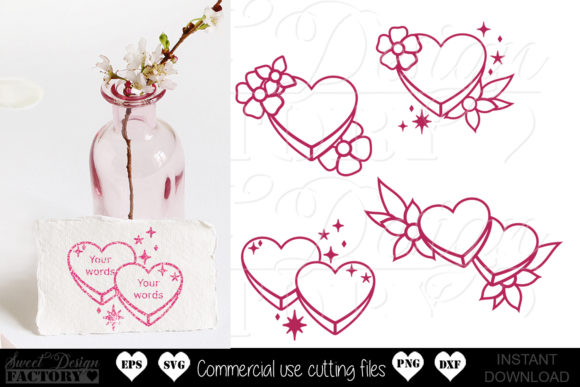
When I opened the Candy Hearts SVG bundle, what struck me wasn’t just the Valentine’s theme—it was how immediately *usable* it felt. These aren’t fussy, overly ornate hearts with delicate filigree or fragile script. Instead, they’re rounded, friendly, and generously proportioned—think cheerful conversation hearts with soft curves, subtle floral accents, and a gentle rhythm between positive and negative space. The design language leans into handmade charm without sacrificing clarity, which is rare in holiday-themed embroidery files. As a designer who regularly sources graphics for client projects and small-batch merchandise, I appreciated that Candy Hearts avoids visual clutter while still offering enough variation (hearts + flowers + phrases) to support cohesive collections—like a set of matching tea towels and baby onesies for a boutique launch.
Where It Shines: Real Projects, Real Fabric
I tested Candy Hearts on three actual products: a medium-weight cotton tote bag, a 100% cotton unisex sweatshirt, and a linen-cotton blend kitchen towel. On the tote, the design stitched cleanly with minimal puckering—especially when paired with a light cutaway stabilizer. The satin stitch edges held well, and the fill stitch density felt balanced: dense enough to read clearly at arm’s length, but not so heavy that it stiffened the fabric. On the sweatshirt, I chose a slightly simplified version (one heart + two small flowers), and it translated beautifully—soft, dimensional, and ageless. Customers don’t see “embroidery file” when they hold that piece; they see warmth, intention, and care. That’s the quiet power of Candy Hearts: it supports the story you’re telling with your handmade product—not the other way around.
For baby embroidery? It’s ideal. The rounded shapes and open lettering (in the conversation-style hearts) avoid sharp corners or micro-details that could snag or irritate sensitive skin. I used it on a gauzy muslin swaddle—lightweight stabilizer, 40-weight thread—and the result was tender, legible, and wash-tested twice with no fraying or distortion. That kind of reliability matters when you're selling personalized gifts on Etsy or prepping for a craft fair.
Where to Proceed Thoughtfully
Candy Hearts isn’t built for ultra-fine detail work. If you’re planning a tiny embroidered patch under 2 inches wide—or stitching directly onto thin, loosely woven fabrics like voile or rayon challis—you’ll want to test first. The floral elements and inner text lines are charming, but they rely on moderate stitch definition. On dark fabric, contrast is strong, but on heather gray or oatmeal knits, I recommend checking thread color contrast in natural light—not just on screen. Also, avoid layering this design over seams or curved surfaces like cap fronts unless you’ve confirmed hoop clearance and fabric stretch tolerance. Satin-stitched edges can torque slightly on high-stretch blends if stabilizer choice isn’t dialed in.
Design Integrity Meets Commercial Sense
What makes Candy Hearts valuable for craft business owners isn’t just its cuteness—it’s its versatility across categories. You can use it as a machine embroidery design for custom apparel, adapt it into an applique design for quilt blocks, or even simplify it further for a running-stitch-only version on kids’ socks. Because the layout is modular (individual hearts, standalone flowers, short phrases), it scales gracefully—from a single heart on a child’s cap to a repeating border on a nursery pillow cover. That flexibility saves time when building digital product previews or printable mockups for your Etsy listings. And yes—it reads well in black-and-white mockups too, which means your product photos won’t rely on color alone to communicate value.
More importantly, Candy Hearts feels *trustworthy*. When customers buy a handmade product featuring this design, they sense consistency—not randomness. The spacing between elements, the weight of the outlines, the balance of open and filled areas—all suggest thoughtful curation. That builds brand consistency, especially if you pair it with complementary fonts or coordinating stitch patterns across your small shop product line.
Practical Notes Every Embroidery Designer Should Keep Handy
- Always test on scrap fabric first—especially with textured or stretchy substrates.
- Review stitch density before scaling: denser fills may require heavier stabilizer on lightweight cottons.
- Confirm hoop size compatibility—some versions in the bundle may exceed standard 4x4 hoops; check file dimensions before digitizing.
- Inspect small details like inner text strokes or petal tips—they’re charming, but verify legibility at your intended final size.
- Test on both light and dark fabric backgrounds using your preferred thread colors; some pastel combos fade visually on off-whites.
- Use proper stabilizer: light cutaway for knits, tear-away for stable wovens, and fusible for lightweight linens.
- Verify licensing terms before selling finished items or bundling Candy Hearts into digital embroidery kits—this is a Graphics asset meant for Crafts use, and commercial rights vary by seller.
The Bottom Line for Makers Who Ship Real Work
Candy Hearts doesn’t try to be everything. It’s not a maximalist holiday statement—it’s a quietly confident, stitch-ready foundation. It works because it respects the medium: embroidery has physical limits, and this design honors them. Whether you’re embroidering a personalized gift for a friend, stocking a boutique shelf with coordinated holiday pieces, or building a scalable digital product line, Candy Hearts delivers consistent, professional-grade results without demanding perfection from your setup. It’s the kind of embroidery file that disappears into your process—so your craftsmanship, your brand voice, and your customer’s joy stay front and center.